Do Primary Schools Still Do Spelling Tests?
Some primary schools still set a weekly spelling test, but many have dropped it. Only one spelling test is compulsory in England, and it happens just once at the very end of primary. This guide explains what the law requires and what each school is free to decide for itself.

If you grew up with a list of ten words on Monday and a test on Friday, it can be a surprise to find your own child doesn't seem to have spelling tests at all. Or the school down the road still runs them every week and yours doesn't. Both can be true at once, and neither school is doing anything wrong.
The short version: the traditional weekly spelling test is no longer required anywhere in England, and a growing number of primary schools have moved away from it. Some keep it because it suits their pupils. One spelling test is still compulsory, but it happens once at the end of Year 6, and the rest is up to each school.
That leaves a lot of parents unsure whether their child is being tested enough, too much, or in the right way. It helps to know what schools have to do, and what they're free to choose.
What does the law require?
Spelling in English primary schools is governed by the National Curriculum, specifically English Appendix 1: Spelling (opens in a new tab). It was published in 2014 and is still in force in 2026. It sets out, year by year, the spelling rules and patterns children must be taught, and for Years 3–4 and Years 5–6, a statutory list of words pupils are expected to spell by the end of each phase.
Most parents miss one thing about it: the curriculum tells schools what to teach, but says almost nothing about how to assess it. No rule says a school must set a weekly list, hold a Friday test, or send spellings home at all. A school can teach the statutory content through investigation, dictation, daily practice or weekly tests, and the method is the teacher's professional choice.
So one school can run weekly tests while another doesn't, and both can be covering the same statutory spelling content. They have chosen different ways to practise it.
Is any spelling test still compulsory?
Only one compulsory spelling test exists in the English primary system, and it sits right at the end of it.
In Year 6, pupils sit the national Grammar, Punctuation and Spelling assessment (opens in a new tab) (often shortened to GPS). It comes in two papers: one covers grammar and punctuation; the other is the spelling test. A teacher reads twenty words aloud, each in a sentence, and pupils write the missing word into a gap. Pupils sit both papers once, in May of Year 6.
Two tests that older siblings may remember have since changed:
- End of Year 2 tests (the old KS1 SATs) became non-statutory from the 2023 to 2024 school year (opens in a new tab). Many schools no longer run them at all.
- The Year 1 Phonics Screening Check still happens every June, but it checks a child's ability to decode: reading words and pseudo-words by sounding them out. It isn't a spelling test, though the two skills are related.
Everything else (the weekly list, the half-term review, the spelling logbook) is something individual schools choose to do, not something they are told to do.
Why did so many schools drop the Friday test?
The weekly test didn't fade by accident. It fell out of favour because the evidence stopped supporting the way it was usually run.
The classic cycle looks like this: a child gets a list on Monday, copies the words out across the week, passes the test on Friday, and has forgotten half of them by half-term. Testing itself works, because retrieving a word from memory is one of the strongest learning tools we have. The problem is the timing. Cramming practice into a few days and never coming back to the words produces memory that fades fast, while a few short bursts spread across the weeks produce spelling that shows up when a child writes.
There is a deeper issue too: memorising a word's shape for Friday is not the same as learning to spell it. Skilled spellers don't store words as pictures; they connect a word's sounds, letters and meaning together so the spelling sticks and transfers to new words. A child can ace a list of twelve memorised words and still misspell those same words in a story two weeks later. (We've written a fuller explanation of how children learn to spell in the science of spelling, if you want the research behind it.)
This is why a lot of schools moved from "learn these ten words" to teaching spelling patterns: the words that follow a rule, the common exceptions, the prefixes and suffixes that unlock dozens of words at once. It is harder to capture in a single Friday quiz, but it does more for a child's writing.
The numbers back this up. A landmark 1966 study for the US Office of Education analysed more than 17,000 words and found that about half are spelled exactly as their sounds predict, with another third regular apart from a single sound. Together, roughly 84% of English words follow predictable patterns, and only about 4% are truly irregular (Hanna et al., 1966). Teach a child the patterns and they can spell most of the language by rule. Drill words by rote and you memorise them one at a time, including the great majority that never needed memorising.
Is your child being taught spelling properly?
Most likely yes, even without a weekly test. The absence of a Friday quiz tells you about a school's assessment choices, not whether spelling is being taught.
If you want to see what your child is expected to learn, the statutory word lists are public. You can browse the year-by-year spelling word lists to see which words and patterns each year group covers. The Year 3 and 4 statutory list is a good example of the level expected mid-primary. They are the same lists every English primary school works from.
A few honest signs that spelling is being taught well, test or no test:
- Your child can explain a pattern, not just recite words ("you drop the e before adding -ing, so 'hike' becomes 'hiking'").
- Correct spellings show up in their independent writing, not just on a list.
- They are learning prefixes, suffixes and word families, which matters more from Year 3 onwards.
- They can make a sensible attempt at a word they have never seen, using the sounds and patterns they know.
What can you do at home?
You don't need to recreate the Friday test at the kitchen table. Three short sessions of the right kind of practice across a week beat one long cramming session, and they cause far fewer tears.
A few things that help:
- Little and often beats long and rare. Five to ten focused minutes most days.
- Practise spelling words inside sentences, not as an isolated list, so the word connects to its meaning. Say the word, use it in a sentence, then ask your child to write just that word.
- Come back to tricky words after a gap of a few days, not just the night before.
- Focus on the patterns your child's year group is working on rather than random word lists.
Doing all of that by hand, every week, is hard. Spacing the practice across the right days, dictating each word in a sentence, circling back to the ones your child keeps missing, keeping track of which patterns have clicked: that is a lot to run on a school night.
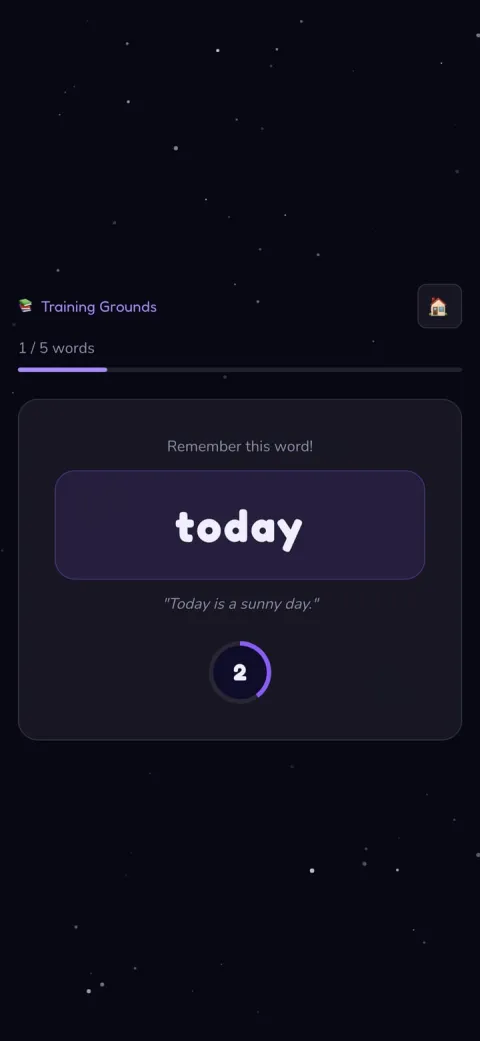
This is the whole point of SpellCast. It takes your child's exact year-group word list and turns it into short, spaced sessions built on retrieval: every word is read aloud inside a sentence, the tricky ones come back on the days that matter, and the focus stays on the patterns their class is learning. It is the research in this article built into about ten minutes a day your child will actually do, from £1.67 a month for the whole family on the annual plan. You can start free — or try it right now with no account: take the free two-minute spelling quiz with your child and see how they get on.


Prefer to practise on paper first? Our free spelling resources for parents are organised by year group and built around the same statutory patterns, with no login and no cost.
The bottom line
Do primary schools still do spelling tests? Some do, many don't, and the weekly Friday test is no longer required of any of them. The only compulsory spelling test is the one your child sits once, at the end of Year 6. Beyond that, schools choose how to assess. A school without weekly tests may be teaching spelling more effectively than one that drills a list every week.
Whether there's a test on Friday matters far less than whether your child can spell those words in their own writing.
Sources
- Department for Education, National curriculum in England: English programmes of study (English Appendix 1: Spelling), 2013, updated 2014. gov.uk (opens in a new tab) (retrieved 24 May 2026).
- Standards and Testing Agency, Key stage 2 English grammar, punctuation and spelling test: information for parents. gov.uk (opens in a new tab) (retrieved 24 May 2026).
- Standards and Testing Agency, National curriculum assessments: key stage 1 tests (KS1 assessments optional from the 2023 to 2024 academic year). gov.uk (opens in a new tab) (retrieved 24 May 2026).
- Hanna, P. R., Hanna, J. S., Hodges, R. E., & Rudorf, E. H., Phoneme-Grapheme Correspondences as Cues to Spelling Improvement, U.S. Office of Education, 1966. ERIC ED128835 (opens in a new tab) (retrieved 24 May 2026).
Frequently asked questions
Are weekly spelling tests compulsory in England?
Is there any compulsory spelling test in primary school?
Did spelling tests get banned?
My child's school doesn't do spelling tests. Should I worry?
How can I check what my child should be learning?
Spelling practice that actually sticks
SpellCast turns the research in this article into ten minutes a day: spaced, retrieval-based practice on your child's exact year-group words, every word read in a sentence. Built on the National Curriculum. Try it free.